Erosion control hydroseeding
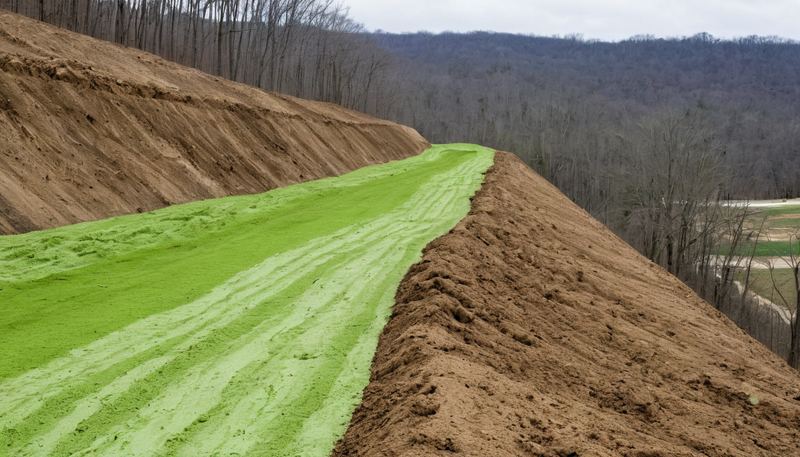
Bare slopes and ditches lose soil every time it rains, and Middle Tennessee gets a lot of heavy rain. Hydroseeding with the right mulch glues seed to the slope and holds the soil until the roots take over.
Updated November 14, 2026
Why slopes wash out here
Middle Tennessee averages around 50 inches of rain a year, and much of it arrives in heavy bursts from spring and summer thunderstorms. Clay soils absorb water slowly, so on a bare slope most of that rain runs straight off, carrying soil with it. The result is gullies on banks, sediment in the street and storm drains, and muddy runoff into creeks like the Stones River and its forks.
Once a slope starts to gully, the problem speeds up: the gullies concentrate water, which cuts them deeper. Getting vegetation established quickly is the cheapest long-term fix.
Where erosion-control hydroseeding is used
- Steep backyard banks behind new homes, especially on hillside lots in Franklin, Nolensville and Spring Hill
- Roadside ditches and drainage swales
- Detention and retention pond banks
- Creek and stream banks (often with extra measures; see below)
- Cut and fill slopes after grading, utility trenches and pipeline routes
- Septic drain fields, farm pond dams and areas cleared for a barn or shop
Mulch makes the difference
On flat ground the mulch mostly holds moisture. On a slope it has a much bigger job: holding the soil and seed in place through storms. Contractors choose the mulch type and rate based on how steep and long the slope is.
| Product | Typical use | Notes |
|---|---|---|
| Paper or wood/paper blend mulch | Flat to gentle ground | Cheapest. Fine for lawns, weak on slopes. |
| Wood fiber mulch with tackifier | Moderate slopes, ditches | Longer fibers interlock and hold better. The common choice for erosion work. |
| Stabilized mulch matrix (SMM) | Moderate to steep slopes | Wood fiber with a stronger tackifier. A step up from standard mulch and a step below BFM in strength and price. |
| Bonded fiber matrix (BFM) | Steep slopes | Fiber plus a strong binder that sets into a continuous crust-like layer. Applied heavier and costs more. |
| Flexible growth medium (FGM) | Steepest slopes, highest-flow areas | Engineered fibers and binders; often used where a blanket would otherwise be needed. |
As a rough guide, slopes gentler than about 3:1 (three feet across for every one foot up) are usually fine with a good wood fiber mulch. Steeper than 3:1, ask about BFM or FGM. Steeper than about 2:1, or anywhere water runs in a channel, you may need erosion-control blanket, turf reinforcement mat or rock in addition to seeding. Manufacturers publish exact slope ratings for each product, and your contractor should follow them.
Seed mixes for erosion control
Erosion seeding usually combines a quick “nurse” crop with long-term grass:
- Quick cover: annual ryegrass or cereal rye in cool months, browntop or German millet in warm months. These sprout within days and hold soil while the permanent grass gets going.
- Permanent cover: tall fescue for cool-season seeding, Bermuda for warm-season seeding, and sometimes native warm-season grasses or wildflowers for low-maintenance banks that will not be mowed.
If you plan to mow the area, say so. A mow-friendly mix for a backyard bank is different from a mix for a ditch line the county will brush-hog twice a year.
Creek banks and stream buffers
Work right along streams can involve state permits. Tennessee’s Department of Environment and Conservation (TDEC) regulates alterations to streams and their banks through its Aquatic Resource Alteration Permit program, and some local governments have stream buffer rules. Seeding an already-disturbed bank above the water is usually simple, but if the job involves reshaping the bank, placing rock or working in the channel, check with TDEC or your city first. A good contractor will raise this.
Watering on slopes
Slopes shed water, so they need lighter, more frequent watering than flat ground to keep the seed moist without causing runoff. For large banks where watering is not practical, the contractor may time the seeding for a wet season, use a heavier mulch that holds more moisture, or seed a dormant mix in late fall that sprouts with spring rains.
Signs a slope needs more than seed
Hydroseeding solves most bare-soil erosion, but some problems need other fixes first or alongside it:
- Water running in a defined channel: a gully that carries water every storm needs blanket, turf reinforcement mat or rock, not just seed.
- Water coming from above: a downspout, driveway or neighbor’s yard dumping water onto the slope. Redirect it first, or the seed will wash out.
- Seeps and wet spots: ground that stays wet for days may need drainage before grass will hold.
- Slumping or cracking soil: signs of slope instability. That is a question for a geotechnical engineer, not a seeding contractor.
- Very steep cut banks: above roughly 1.5:1 to 1:1, vegetation alone may not hold, and a retaining wall or rock may be needed.
The first year on a seeded slope
Walk the slope after each heavy storm for the first couple of months. Small washouts are easy to fix: rough up the spot, reseed and cover it with a little mulch or a piece of erosion blanket. Leave the slope uncut, or mow it high, until the grass is well rooted. In the first fall, overseed any thin areas while the soil is still warm. By the second spring, a well-established slope should need little attention beyond mowing or an occasional trim.
What erosion-control seeding costs
Erosion work is usually priced per square foot for residential slopes and per acre for larger areas. Cost rises with slope steepness (heavier mulch, BFM or blanket), access (long hose runs or slopes the truck cannot reach) and any required follow-up visits. See hydroseeding cost in Middle Tennessee for typical ranges, and builder and commercial hydroseeding for permit-driven site work.
Questions about erosion control
Will hydroseed wash away in heavy rain?
A properly applied slurry with tackifier and the right mulch rate holds through ordinary storms, even on slopes. A very heavy storm in the first few days can still wash out spots, especially where water concentrates. Many contractors will touch up small washouts.
How steep a slope can be hydroseeded?
Standard hydroseed works on gentle to moderate slopes. Steeper slopes need bonded fiber matrix or flexible growth medium, and the steepest or channel areas may need blanket or matting under or over the seed.
Is hydroseeding better than straw for erosion control?
On slopes, usually yes. Straw blows and slides off, and it often carries weed seed. Hydromulch is glued to the soil and covers evenly. Straw can still make sense on flat ground where cost matters most.
Have a bank or ditch that keeps washing out? Describe it and a local pro will recommend the right mulch and mix.
Get a free quote or call (615) 784-9092