Hydroseed not growing? Common problems and how to fix them
Most hydroseeding problems show up in the first month and most of them can be fixed. Here is how to tell what went wrong, what you can do yourself and when to call the contractor back.
Updated November 14, 2026
First, give it enough time
Before deciding anything has failed, check the calendar. Tall fescue usually sprouts in 7 to 14 days with steady watering. Bermuda needs warm soil and can take up to three weeks. In cool weather, such as late October or early spring, everything is slower.
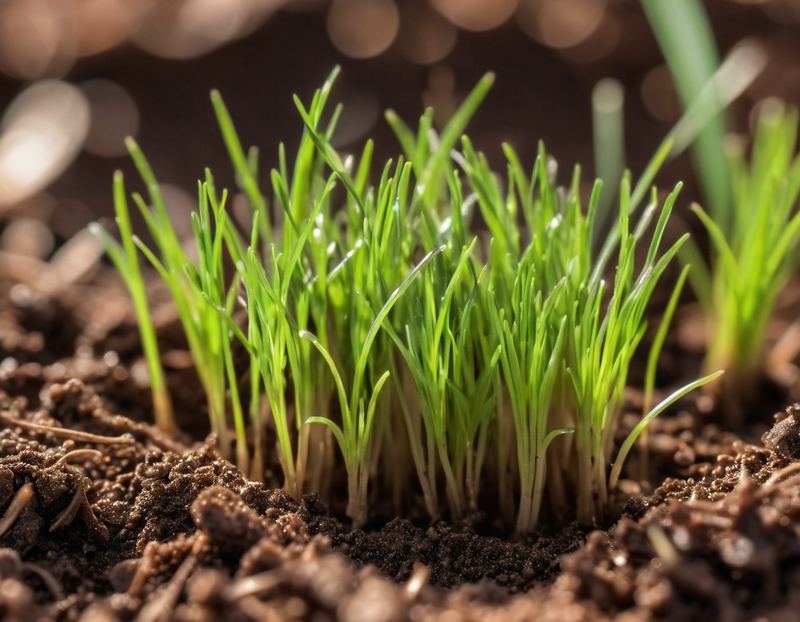
Look closely, not from the porch. New fescue starts as fine, hair-thin green threads that are hard to see against the mulch. Get down at ground level in a few spots. If you see sprouts in most places, the lawn is coming, even if it looks thin for now. Coverage always looks uneven in the first two weeks.
Patchy germination and dry spots
The most common problem by far. Seed that dries out after it starts to sprout dies, and a single hot, windy afternoon without water can be enough.
Signs
- Bare patches in the same places your sprinkler does not quite reach
- Thin strips along the driveway, sidewalk and street, where concrete holds heat
- Bare high spots and the tops of slopes, which dry out first
Fix
Check sprinkler coverage by setting out a few cans or cups and running one cycle. Move sprinklers or add a hose-end sprinkler for the gaps. Add a short extra watering on hot afternoons for the edges. Bare patches can be reseeded by hand once you know the cause: rough up the surface lightly, spread seed, press it in and keep it moist.
Washouts after a storm
Middle Tennessee thunderstorms can drop an inch or more of rain in an hour. If a heavy storm hits in the first few days, before the tackifier has fully set, slurry can wash off in places.
Signs
- Green mulch piled in low spots or along the curb
- Small channels cut through the mulch on slopes
- Grass coming up thick at the bottom of a slope and missing at the top
Fix
Call the contractor if the washout is significant. Many will touch up washouts that happen shortly after seeding, though policies vary, so check your quote. For small spots, rake the area, reseed and cover lightly with a little mulch or a piece of erosion blanket. If water is coming from a downspout or a neighbor’s yard, redirect it first or the patch will wash out again.
Too much water
Less common than too little, but it happens, especially on heavy clay that drains slowly.
Signs
- Puddles that stand for hours after watering
- Green or black slime on the soil surface, which is algae
- Seedlings that sprout, then fall over and rot at the base
- A sour smell
Fix
Water less each time and let the surface dry slightly between cycles. The goal is a soil surface that stays damp, not wet. Once the grass is up, switch to longer, less frequent watering so the roots grow down.
The mulch crust will not soak in
As the mulch dries, it can form a paper-like crust that sheds water. Run two short watering cycles a few minutes apart: the first wets the crust and the second soaks through. This crust breaks down on its own within a few weeks.
Weeds coming up with the grass
Some weeds are normal in any new lawn. Where they come from matters:
- Leftover builder’s straw often carries weed and grain seed. Expect coarse clumps of dallisgrass or Johnsongrass where the straw was.
- Brought-in topsoil that was not screened can carry a lot of weed seed.
- Spring seedings compete with crabgrass, which sprouts as the soil warms in April and May.
- Seed that sat bare for a while lets windblown weed seed settle in.
Do not spray weed killer on a new lawn. Most herbicides can damage young grass. Mow regularly, which sets back many weeds, and wait until the new grass has been mowed two or three times before using any product labeled for new seedings. For fall-seeded fescue, many weeds die back over winter and the grass thickens enough by spring to crowd out the rest.
Not sure if it is grass or a weed? Young tall fescue has narrow, dark green blades with visible ribs. Crabgrass seedlings are lighter green, wider and hairy, and spread flat.
Yellow or brown patches
- Pale yellow all over, a few weeks in: often the starter fertilizer running out. A follow-up feeding at about six to eight weeks usually fixes it.
- Brown, irregular patches in hot, humid weather: fescue is prone to a fungus called brown patch in Middle Tennessee summers. Water in the early morning, never at night, and ask your contractor or the county Extension office before treating it.
- Brown, dry patches over buried rock or gravel: roots cannot get enough water. These spots need soil added and reseeding.
The lawn thins out in the first summer
Fescue seeded in spring has only a few months to root before July heat arrives, and some thinning in its first summer is common. Keep mowing high, around 3.5 to 4 inches, water deeply once or twice a week and plan to overseed the thin areas in September. Fall-seeded fescue rarely has this problem, which is why fall is the preferred time to seed it here.
Birds, dogs and foot traffic
Birds take some seed, but the mulch layer hides most of it, and hydroseed rates allow for some loss. Dogs are harder. Running paths and urine spots will stay bare. Fence off part of the yard for the dog while the lawn establishes, or plan to reseed the dog run later. Keep all foot traffic off for at least three to four weeks.
What a contractor will usually fix
Many hydroseeding contractors offer some kind of germination or touch-up promise. Typical terms:
- Covers seed that does not come up within a set window, often two to four weeks in season
- Requires that you followed the watering instructions
- May cover washouts from heavy rain soon after seeding
- Usually excludes damage from pets, foot traffic, vehicles, drought without watering and seeding outside the recommended season
- Usually does not cover weeds
Every contractor writes their own terms, so read the quote and ask before the job starts. Take dated photos as the lawn comes in. If you need to call back, photos make the conversation easy.
Wait, patch or reseed?
| What you see | What to do |
|---|---|
| Sprouts in most places, a few thin spots, under three weeks | Wait and keep watering. It will fill in. |
| A handful of bare patches after three to four weeks | Hand-seed the patches and keep them moist. |
| Large bare areas after a storm | Call the contractor about a touch-up spray. |
| Half or more of the lawn bare after four weeks in season | Find the cause first (water, soil, timing), then plan a reseeding. |
| Thin fescue after its first summer | Overseed in September. |
Questions about hydroseed problems
Why is my hydroseed not growing?
The most common reasons are seed drying out between waterings, a heavy storm washing slurry away in the first few days, seeding outside the right season and soil that is too compacted or rocky for roots. Check how long it has been first: fescue takes 7 to 14 days to sprout and Bermuda up to three weeks.
Why is my hydroseed patchy?
Patchy coverage usually lines up with sprinkler gaps, hot edges along concrete, high spots that dry out or low spots where seed washed in. Some unevenness in the first two weeks is normal. Fix the watering, then hand-seed patches that stay bare after three to four weeks.
Can you put more hydroseed over existing hydroseed?
Yes. A contractor can spray a touch-up over thin or washed-out areas, and many do this as part of their guarantee. For a few small spots, hand-seeding is cheaper and works fine.
How do I know if hydroseed is dead?
Seed that has not sprouted is not necessarily dead. If it is cool or dry, it may still come up once conditions improve. Seedlings that sprouted and then turned brown and brittle after drying out are dead and need reseeding.
Is it normal to have weeds in new hydroseed?
Yes, some weeds come up in nearly every new lawn, especially on soil that was bare for a while or covered with builder’s straw. Mow regularly and wait until the lawn has been mowed two or three times before using any weed killer labeled for new grass.
Hydroseed watering schedule and care Soil prep for hydroseeding
Hydroseed not coming in? Send photos and a local pro can tell you whether it needs time, a touch-up or a reseed.
Get a free quote or call (615) 784-9092