Grass types and planting seasons for Middle Tennessee
Middle Tennessee sits in the transition zone, where no lawn grass is perfectly at home. Picking the right one for your sun, use and patience, and seeding it in the right month, matters more than anything else you do.
Updated November 14, 2026
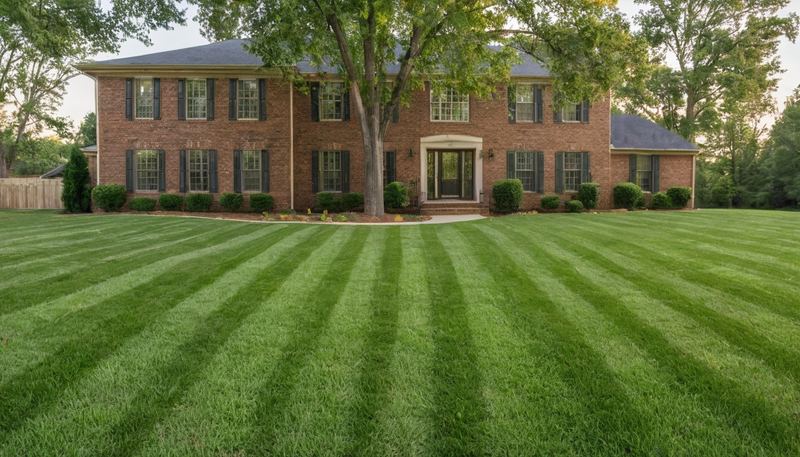
The transition zone in plain terms
Cool-season grasses like tall fescue grow best in spring and fall and struggle through hot, humid July and August. Warm-season grasses like Bermuda and zoysia thrive in summer heat but go dormant and brown after the first hard frost until spring warms up. Murfreesboro has hot, humid summers and cold-enough winters, so each type has a season where it suffers. The goal is to pick the grass whose bad season you mind least.
Tall fescue
Best for: homeowners who want a lawn that stays green most of the year, yards with some shade, and most new-build lots seeded in fall.
- Stays green through winter and most of the year, though it can thin and brown in summer drought.
- Handles moderate shade better than Bermuda or most zoysia.
- Bunch-forming: it does not spread much on its own, so thin spots need overseeding, often every fall or two.
- Mow high, around 3 to 4 inches, to shade the soil and get it through summer.
- Turf-type tall fescue blends are finer and darker than old pasture fescue. Ask for a blend of several improved varieties rather than a single cheap variety.
When to seed: late August to mid-October is best, with September usually ideal. Second choice is late February to April. Seeding fescue from May through July is risky because seedlings have to face summer heat right away.
Bermudagrass
Best for: full-sun yards, high-traffic areas, kids and dogs, and people who do not mind a brown lawn in winter.
- Thrives in heat and full sun; very drought tolerant once established.
- Spreads by runners above and below ground, so it repairs its own damage.
- Does poorly in shade; under trees it thins out.
- Goes dormant and tan after the first hard frost, usually from around late October or November until April or May.
- Aggressive: it will creep into flower beds and neighboring fescue lawns.
- Mow short, around 1 to 2 inches, and often during summer.
When to seed: once soil temperatures stay in the upper 60s, usually mid-May through July. Seeding after about mid-July risks the grass not establishing before frost.
Zoysia
Best for: people who want a dense, carpet-like lawn and are willing to pay for sod or plugs.
- Very dense, handles wear and some light shade better than Bermuda.
- Slow to establish, especially from seed; most zoysia lawns are sodded or plugged.
- Goes dormant in winter like Bermuda, though often slightly later in fall.
Some seeded zoysia varieties exist, but they need warm temperatures and a long, careful establishment. Most hydroseeding contractors will steer you to fescue or Bermuda instead.
Quick picker
| Your yard | Usual choice |
|---|---|
| Mixed sun and shade, want green in winter | Tall fescue blend |
| Full sun all day, heavy use, OK with brown winters | Bermuda |
| Mostly shade under mature trees | Shade-tolerant fescue blend, and accept some thinning |
| Slope or bank you rarely mow | Fescue or Bermuda with an erosion mix, or a native grass mix |
| Want the densest, plushest lawn | Zoysia sod |
Temporary and cover grasses
When the season is wrong for your permanent grass, contractors often use a temporary cover to hold the soil:
- Annual ryegrass: sprouts fast in cool weather and dies out in summer heat. Great for winter cover on builder lots. Avoid heavy rates in a fescue lawn, as it can crowd seedlings.
- Cereal rye: a hardy winter cover for construction sites.
- Browntop or German millet: fast summer cover that dies with the first frost, making room for fall fescue seeding.
A planting calendar for Murfreesboro
| Months | Good for |
|---|---|
| January to February | Dormant seeding of fescue (sprouts in spring); temporary cover on sites |
| March to April | Spring fescue seeding (second-best window) |
| May to July | Bermuda seeding; millet cover crops |
| Late August to mid-October | Best fescue seeding and overseeding window |
| Late October to December | Late fescue seeding (riskier), ryegrass or cereal rye cover, dormant seeding |
Weather shifts these windows a little each year. Soil temperature is a better guide than the calendar: fescue germinates well with soil in the 50s to 60s, Bermuda needs it warmer.
Reading a seed label
Seed sold in Tennessee carries a label listing what is in the bag. It is worth asking your contractor which seed they use and looking at the label. The things to check:
- Variety names: good turf-type tall fescue lists named varieties, usually a blend of three or more. “Kentucky 31” is an older pasture-type fescue; it is tough but coarse and lighter green than turf types.
- Germination percentage: higher is better. Look for 85% or more for fescue.
- Weed seed and other crop seed: both should be very low, ideally well under 1%.
- Noxious weeds: should be none.
- Test date: seed loses vigor with age. A recent test date is better.
University of Tennessee turfgrass guidance gives a seeding rate of roughly 5 to 8 pounds of tall fescue per 1,000 square feet for a new lawn, using the lower end for fresh seed with high germination. It also suggests looking for at least 85% germination and 95% purity. Overseeding into an existing fescue lawn uses less, often around 4 pounds per 1,000 square feet. When you compare quotes, ask each contractor what rate they use.
Cheap seed usually costs more in the end, because more of the bag is filler, weeds or seed that never sprouts.
Mixing grass types on one property
You do not have to use one grass everywhere. A common setup on larger lots is a tall fescue blend in the shaded and front areas, with Bermuda or a low-maintenance mix on a sunny back slope or out by the road. Keep them in separate areas with a clear boundary, such as a bed or a driveway, so Bermuda does not creep into the fescue.
Soil testing
A soil test tells you the pH and the nutrients your soil is short of, so the contractor can add the right amount of lime and fertilizer. UT Extension offices in Rutherford, Williamson and Wilson counties can help you submit samples to the University of Tennessee soil lab for a small fee.
Questions about grass and timing
What is the best grass seed for Middle Tennessee?
For most lawns with some shade and a wish for year-round green, a turf-type tall fescue blend. For full sun and heavy use, Bermuda. Zoysia is excellent but usually planted as sod.
When is it too late to plant grass seed in Tennessee?
For fescue in Middle Tennessee, mid-October is the practical cutoff for a strong fall start; later seedings may sprout but go into winter weak. For Bermuda, aim to seed by early to mid-July.
Can I mix fescue and Bermuda?
It is not recommended for a lawn. They grow in different seasons and look different, so the lawn ends up patchy, and Bermuda usually takes over the sunny areas.
Not sure which grass fits your yard? A local pro will recommend one when they quote.
Get a free quote or call (615) 784-9092