Soil prep for hydroseeding on Middle Tennessee clay
Hydroseed only grows as well as the ground it lands on. On most new-build lots around Murfreesboro, the soil needs work before any seed goes down, and that prep decides whether you get a lawn or a patchy field of weeds.
Updated November 14, 2026
Why prep matters more than the seed
A hydroseeding crew sprays seed, fertilizer and mulch onto whatever surface is there. The slurry cannot fix packed clay, a low spot that holds water or a layer of gravel. Most hydroseeding jobs that disappoint around Middle Tennessee do not fail because of the seed or the mulch. They fail because roots could not get down into the soil, or because water ran off or pooled instead of soaking in.
The good news is that most prep is simple, and some of it you can do yourself to lower the price. This guide covers what builders usually leave behind, how much topsoil you really need and what the ground should look like on spraying day.
What builders usually leave behind
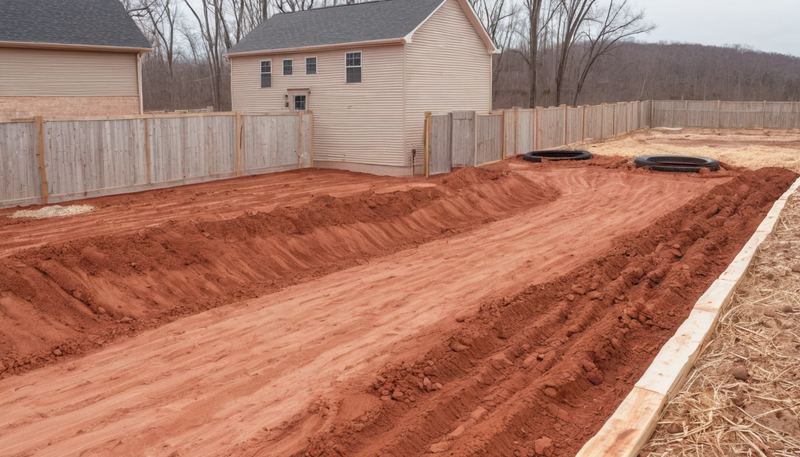
On a typical new subdivision lot in Murfreesboro, Smyrna or the Blackman area, the topsoil was scraped off early in construction and the yard was rough graded with whatever was left. That usually means:
- Compacted subsoil. Red or orange clay pressed hard by trucks, skid steers and pallets of brick. Roots struggle to push into it and rain runs off the surface.
- Construction debris. Nails, concrete splatter, brick pieces, wire, cut lumber and buried trash near the foundation and the driveway.
- Gravel and rock. Driveway base and construction entrance gravel spread into the yard, plus limestone chunks turned up during excavation.
- Erosion-control straw. Straw spread during construction often carries weed and grain seed. A year later, dallisgrass, Johnsongrass and other coarse weeds come up in clumps where it was.
- Silt fence and stakes. Old silt fence left along the back or side of the lot, sometimes half buried.
- Ruts and low spots. Tire tracks that hold water and settled trenches over utility lines.
None of this is unusual, and none of it means the yard is a lost cause. It just needs to be dealt with before seeding, not after.
Grading and drainage come first
Fix the shape of the yard before you think about seed. Water should move away from the house and off the lot without pooling. A common building standard is for the ground to fall at least 6 inches within the first 10 feet away from the foundation. Beyond that, the yard should slope gently toward a swale, the street or a drainage easement.
Walk the yard after a good rain. Puddles that last more than a day, water running toward the house or a strip that stays soggy are all things to fix now. Grass will not hold on a spot that floods every storm, and fixing grading after the lawn is in means tearing it up.
If your builder still owes you final grading, push for it before you seed. Many new-home warranties cover drainage problems in the first year, so document them with photos.
Topsoil: when you need it and how much
Grass will grow in Middle Tennessee clay if it is loosened and amended, but a layer of good topsoil makes establishment faster and the lawn more forgiving in drought.
When topsoil is worth it
- The yard is bare subsoil with no dark soil left at all
- Large areas are gravel, shale or chunky fill
- Low spots need filling and you would rather fill with soil that grows grass
- You want the best chance on a lawn you will keep for years
How deep
Two to four inches of screened topsoil, worked into the top few inches of the native soil, is the usual target for a lawn. A thin skin of topsoil dumped on hard clay can create a layer that water sits on top of, so it helps to loosen the clay first and mix the two at the boundary.
How much to order
Two inches over 1,000 square feet is about 6.2 cubic yards. Three inches is about 9.3 cubic yards, and four inches is about 12.4. For a 7,000 square foot yard at two inches, that is roughly 43 cubic yards, which is several dump truck loads.
What to ask for
Ask for screened topsoil, not fill dirt. Ask where it came from and whether it is weed free. Cheap topsoil can bring in more weed seed than the builder’s straw did. A load that is mostly orange clay or full of rocks and roots is not worth paying topsoil prices for.
Breaking up compaction
Compaction is the hidden problem on most builder lots. A quick test: push a long screwdriver or a piece of rebar into the ground a day after rain. If it stops after an inch or two, roots will too.
- Tilling the top 4 to 6 inches loosens the surface and mixes in topsoil or compost. Do it when the soil is moist but not wet. Tilling wet clay smears it into hard clods that bake like brick.
- Ripping with a tractor or skid steer attachment goes deeper on badly packed areas, such as where the construction entrance was.
- Core aeration helps on yards that have some soil and only need loosening, and it is gentler around trees.
After loosening, the surface should be rolled or raked so it is firm. A good test is that your shoe sinks no more than about half an inch. Fluffy, freshly tilled soil settles unevenly after the first rain and leaves the lawn bumpy.
Rock and limestone
Murfreesboro sits in the Central Basin of Tennessee, where limestone is often close to the surface and soils can be thin. Expect to rake out a lot of rock on some lots. Remove anything bigger than a golf ball from the top couple of inches, and dig out larger pieces where they stick up, since they will scalp the mower and leave dry spots where grass struggles over shallow rock.
Where bedrock is very shallow across a whole area, adding topsoil is often the only practical way to get enough depth for roots.
Test the soil before you seed
A soil test tells you the pH and which nutrients are low, so lime and fertilizer go on only where needed. Your county UT Extension office can provide a soil test kit and send the sample to the University of Tennessee lab for a modest fee. Results usually come back with lime and fertilizer recommendations for the grass you plan to grow.
Many Middle Tennessee soils are slightly acidic, and fescue grows best at a pH around 6 to 7. If lime is needed, it can be worked into the soil during prep or added to the hydroseed slurry. Ask your contractor which they prefer.
What the ground should look like on spraying day
- Graded. Smooth, with water moving away from the house and no ruts.
- Loose on top, firm underneath. The top inch or so is crumbly and rough enough to hold seed, but you do not sink in when you walk.
- Clean. Debris, large rock, old straw piles and silt fence removed.
- Weeds handled. Existing weeds killed or removed. Spraying seed into established weeds gives the weeds a head start.
- Slightly moist. Not muddy and not baked hard. A dry, crusted surface sheds the slurry and water.
Who does what
Some contractors include light prep, such as raking and minor leveling, in their price. Others quote prep separately or expect the ground to be ready. Ask exactly what is included before comparing quotes, because prep is often the biggest difference between two prices for the same yard.
Jobs you can usually do yourself to save money:
- Picking up debris, nails, wire and trash
- Raking out rocks and old straw
- Pulling or spraying existing weeds a couple of weeks before seeding
- Getting a soil test
- Marking sprinkler heads, septic lids, invisible dog fence wire and cable lines
Jobs that usually need a contractor:
- Regrading and fixing drainage
- Hauling and spreading topsoil
- Tilling or ripping large areas of compacted clay
- Removing large rock
If any digging is involved, Tennessee law requires a call to Tennessee 811 a few days before so buried utilities can be marked.
Prep checklist before the crew arrives
- Final grade done, with no standing water after rain
- Topsoil delivered and spread, if you are using it
- Soil loosened and then firmed
- Rock, debris, straw piles and silt fence removed
- Weeds killed or removed
- Sprinkler heads, septic lids and buried wires marked
- Gates unlocked and cars moved so the truck can reach the yard
- Hoses, sprinklers or an irrigation timer ready to start watering the same day
Soil prep questions
Do I need topsoil to hydroseed?
Not always. Loosened Middle Tennessee clay will grow grass, especially with lime and fertilizer based on a soil test. Topsoil is worth it where the yard is bare subsoil, gravel or rocky fill, and it makes the new lawn more forgiving in dry spells. Two to four inches worked into the native soil is the usual target.
Can you hydroseed over gravel or rocky soil?
The slurry will stick, but grass will struggle where there is no soil for roots. Rake out the rock you can, and add topsoil over areas that are mostly gravel, shale or shallow limestone.
Should I till clay before hydroseeding?
On compacted builder lots, usually yes, to a depth of 4 to 6 inches. Till when the soil is moist but not wet, then rake and firm the surface. Tilling wet clay creates hard clods that are worse than what you started with.
How soon after grading can I hydroseed?
As soon as the grade is finished and the surface is firm, as long as it is within the planting season for your grass. Letting a graded yard sit bare for weeks invites erosion and weeds, so many people schedule the seeding right after final grade.
Will the builder’s straw cause weeds?
It can. Straw used for erosion control during construction often carries weed and grain seed. Rake up what is left before seeding, and expect to deal with some coarse weeds, such as dallisgrass, in the first year. Regular mowing and a well-timed herbicide once the lawn is established will take care of most of them.
Not sure how much prep your yard needs? Send a few photos and a local pro will tell you what to fix first.
Get a free quote or call (615) 784-9092