Residential hydroseeding in Murfreesboro
Most Murfreesboro new builds come with a yard of compacted clay, a little straw and a lot of mud. Hydroseeding turns that into a real lawn for a fraction of the cost of sod.
Updated November 14, 2026
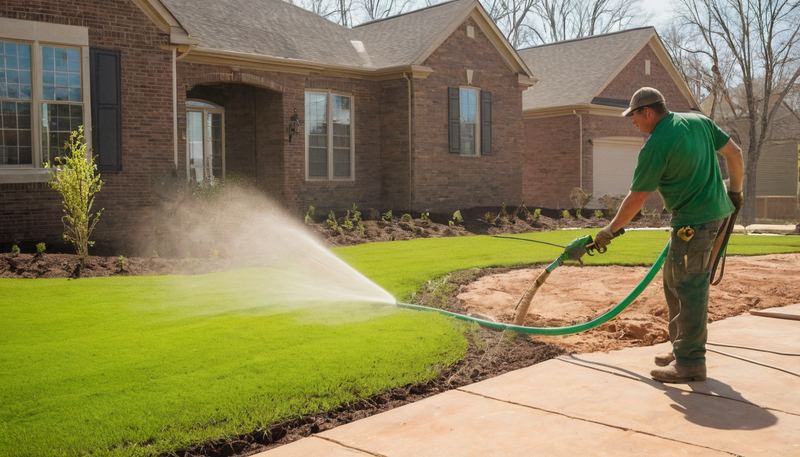
Why new-build yards struggle
When a subdivision goes in, the site crew strips the topsoil, grades the lots and runs heavy equipment over everything for months. By the time the house closes, what is left around it is usually subsoil: dense, sticky clay with chunks of limestone, packed hard by trucks and skid steers. Rutherford County sits in the Central Basin, where the bedrock is limestone and the natural soil layer is often thin to begin with, so there is not much to work with.
Builders are often required to stabilize the lot before closing, and many do it with a quick broadcast of seed and straw. It looks green for a few weeks, then the straw blows away, summer heat cooks the seedlings, and by the next year you have bare patches, ruts where the rain runs off, and a crop of crabgrass and nutsedge. That is where most of our residential calls come from.
What a hydroseeding job involves
- Site check. The contractor looks at the soil, slope, drainage, sprinklers and how they can get a hose or truck to every part of the yard. Many will quote from photos and a measurement, others prefer a quick visit.
- Soil prep. Rocks and construction debris are raked out, ruts are filled, and hard clay is loosened with a tiller, harrow or power rake. Where the builder left very little topsoil, adding a couple of inches of screened topsoil or compost before seeding makes a big difference. Your contractor may recommend a soil test through UT Extension so lime and fertilizer match what your soil actually needs.
- Mixing. Seed, starter fertilizer, fiber mulch, tackifier and water go into the tank. The seed blend is chosen for your yard: usually a turf-type tall fescue blend for sun and part shade, Bermuda for full-sun yards when seeding in late spring or summer.
- Spraying. The slurry is sprayed evenly over the prepared soil, often in two directions for even coverage. A typical quarter-acre yard takes a couple of hours. The green color fades within a few days.
- Watering instructions. Before they leave, a good contractor walks you through the watering plan. This is the part that decides whether the job succeeds.
How much yard you can do
Hydroseeding is efficient at any size, but contractors have a minimum charge because the truck, crew and setup cost the same whether they spray 2,000 square feet or 10,000. Below roughly 2,000 to 3,000 square feet, the price per square foot climbs quickly. For a small bare patch, ask whether the contractor can add it to another job nearby, or consider seed and a good mulch by hand.
A typical new-build lot in Murfreesboro or Smyrna has somewhere between 5,000 and 12,000 square feet of yard once you take out the house, driveway and beds. That is right in the range where hydroseeding saves the most compared with sod.
Choosing the grass
Middle Tennessee is in the transition zone, which means it is a little too hot in summer for cool-season grasses to be easy and a little too cold in winter for warm-season grasses to stay green. Each choice has a trade-off:
- Tall fescue stays green most of the year, handles some shade and is what most Rutherford County lawns are. Seed it in fall (late August to mid-October) for the best results. Expect to overseed thin spots every fall or two.
- Bermudagrass loves full sun and heat, spreads to fill damage, and is very drought tolerant, but goes brown from the first hard frost until spring and will not grow in shade. Seed it from about mid-May to July.
- Zoysia makes a dense, handsome lawn but is slow from seed. It is usually planted as sod or plugs rather than hydroseeded.
Our guide to grass types for Middle Tennessee goes deeper on which fits your yard.
Timing your project
If you close on your house in summer, you have two options. You can stabilize the yard now with a temporary cover and seed fescue in September, or you can go with Bermuda while the soil is warm. If you close in winter, contractors can still prep and spray, either with a dormant seeding that sprouts in spring or with a temporary annual ryegrass to hold the soil until the right window. Book fall seeding early: many contractors fill their September calendar by late summer.
What it costs
For planning, residential hydroseeding in the Murfreesboro area commonly falls somewhere around 8 to 20 cents per square foot, plus soil prep and topsoil when needed. For a 7,000 square foot yard, that puts the spray itself roughly in the high hundreds to low thousands of dollars. Sod for the same yard is often several times more. The cost page breaks down what moves the price.
These are typical ranges to help you budget, not quotes. Your contractor will give you a firm price after seeing the yard.
What to ask before you hire
- What seed blend and rate will you use, and is it certified seed?
- What mulch rate and type? Wood fiber or a wood and paper blend holds better on slopes than paper alone.
- Is soil prep included, and how deep will you loosen the clay?
- Do you add lime or fertilizer based on a soil test?
- What happens if a storm washes part of it out in the first week, or an area does not come up?
- When should I do the first mow and the first fertilizer feeding?
After the spray
Keep the surface damp for the first two to three weeks: several short waterings a day rather than one long soak. Keep kids, dogs and cars off it. Wait to mow until the grass is about 4 inches tall. Our hydroseed lawn care guide walks through it week by week.
Questions about new-lawn hydroseeding
Can you hydroseed over the builder’s straw?
Light, scattered straw can usually be raked out or worked into the soil during prep. Thick matted straw should be removed so the slurry reaches the soil.
Do I need topsoil before hydroseeding?
Not always, but on a new build where the topsoil was stripped, a couple of inches of good topsoil or compost gives the grass a much better start. Ask your contractor to check how much is there.
Can I hydroseed if I have an irrigation system?
Yes, and it makes watering much easier. Mark the sprinkler heads so they are not buried during prep, and switch the system to short, frequent cycles for the first few weeks.
Will the green dye stain my house or driveway?
Overspray on concrete or siding usually rinses off with a hose if done the same day. Good crews mask or avoid hard surfaces and clean up before leaving.
Soil prep for hydroseeding on clay Hydroseed not growing?
Tell us your town and yard size and a local crew will price your new lawn.
Get a free quote or call (615) 784-9092